We may earn commission from links on this page, but we only recommend products we love. Promise.
5 structured baby carriers for the days your baby insists on coming along
For the parent who can locate a pacifier with one hand, but would really like to butter some toast with two.
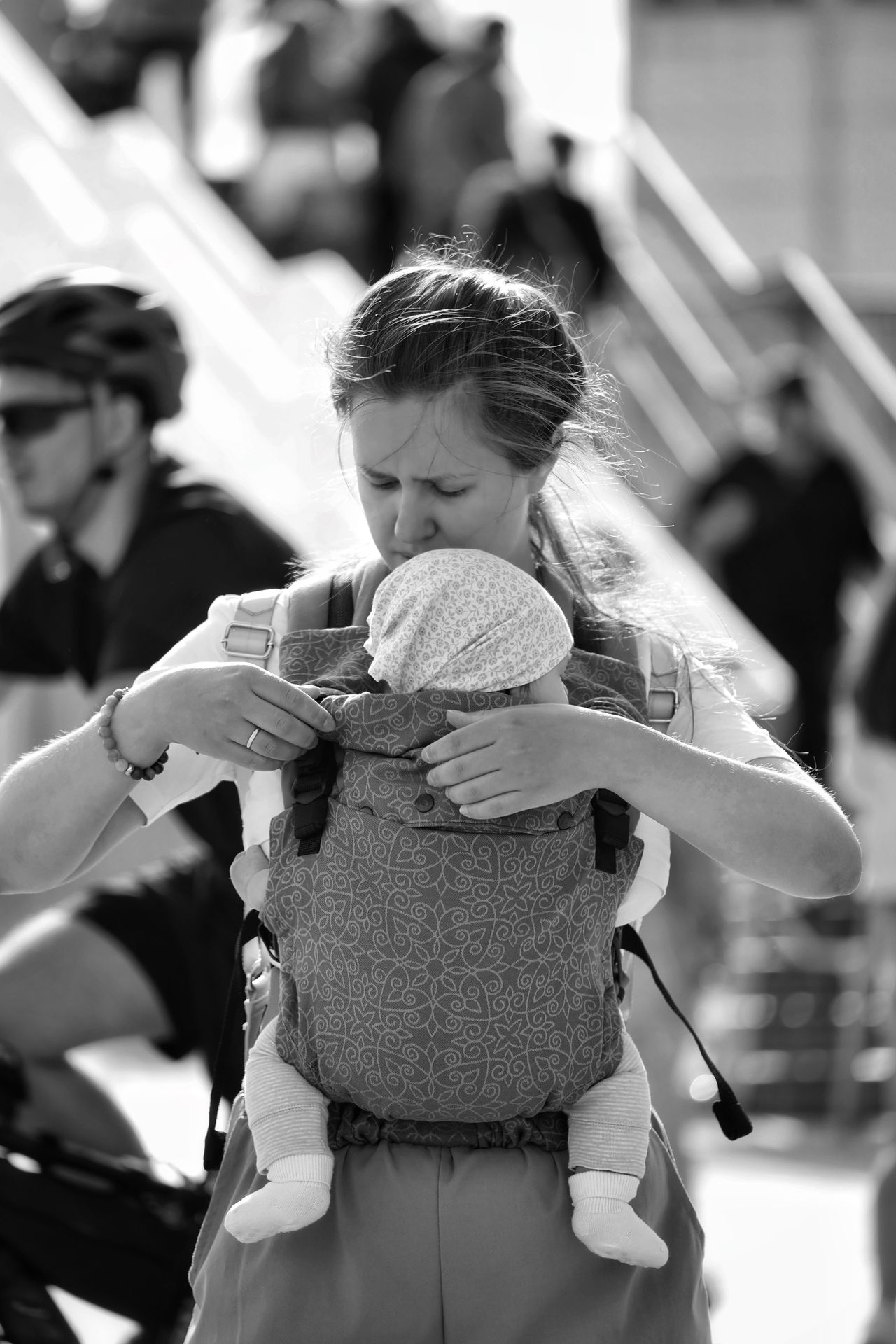
Illustrative stock photograph; the carrier pictured isn’t identified as one of the reviewed models.
Your baby is perfectly happy to watch you fold laundry. There’s just one condition. They’d like to supervise from the crook of your left arm. Switch arms? Fine. Put them on the play mat, six inches from your feet? Apparently you’ve gone abroad.
This is where a structured carrier earns its hook by the front door. Two shoulder straps, a shaped seat, and a few buckles give your baby a place to ride while you get on with the morning. The question is which carrier you’ll actually reach for when you’re already wearing one shoe and somebody has started crying.
The WildBird Aerial is our pick for everyday carrying once your baby fits it. Its crossed straps, supportive waistband, and linen outer make a persuasive combination at $178. But the answer changes if you’re bringing home a newborn, want a baby to face outward later, or have about $35 to spend. Here’s where each of the five earns its keep. WildBird’s Aerial specifications
5 reasons to get a structured carrier
- The walk is longer than your arms would like. Scooping up a baby for a cuddle is one thing. Holding them through the walk to the pharmacy, the prescription line, and the walk home is quite another. Two shoulder straps and, on most of these carriers, a waistbelt give you somewhere else to put that load.
- You’d like to finish one small job. A snug front carry lets a baby watch you pair socks or choose apples. It’s particularly handy when an older child reaches up for your hand and expects, quite reasonably, to find it available.
- The route is a pain with wheels. Three front steps, a narrow shop door, and a stroller can turn buying milk into a logistics exercise. On trips like that, wearing the baby can be the simpler choice.
- You like a setup you can repeat. Once you’ve learned the seat and strap adjustments for your body and baby, buckling up becomes a familiar sequence. That’s worth something at 7 a.m.
- You want options as your baby grows. Four carriers below offer a back carry for a child who meets that model’s requirements. That can make the same purchase useful well beyond the months when your baby rides against your chest.
3 reasons you might skip one
- Your toddler requests “up” for exactly twenty seconds. By the time the last buckle clicks, they’ve spotted a pigeon and want down. For a day of rapid transfers, a full carrier can feel like too much ceremony.
- You need the stroller’s basket as much as its seat. A carrier gets the baby up the steps. The groceries, rain cover, and mysteriously indispensable toy excavator still need a ride home.
- The fit doesn’t work for whoever will wear it. Shoulder width, waistband placement, and the ability to reach a buckle matter more than a beautiful product photo. If two adults will share one, check that it adjusts far enough for both and that both can secure it independently.
The five, ranked
We compared published specifications and US prices, giving the most weight to everyday fit, support, materials, and value. The ranking reflects those editorial priorities. Comfort is personal, and this is a research-based comparison. Prices are for the versions linked.
1. WildBird Aerial
Best overall for everyday carrying · $178 in Sugarbird
The Aerial makes its strongest case on an ordinary morning. You want your baby facing you, a waistband with some substance, and straps that cross behind you. You also want to look in the mirror and still recognize the person who got dressed. The Sugarbird version has a petal-pink linen outer with a visible weave. For something that covers most of your shirt, liking the fabric counts.
What earns it first place. WildBird pairs the linen with a polyester mesh lining, padded cross-back straps, and a broad lumbar belt. The belt comes in two size ranges, 24–41 inches and 35–53.5 inches. Those numbers are particularly helpful if you’re buying online or sharing with a partner. At almost exactly the price of the Tula and Ergobaby below, the Aerial is the one we’d choose for a daily inward carry, with back carrying available later.
Room for improvement. There’s no outward-facing mode. And while the carrier is tested for 7–45 lb, WildBird recommends it for roughly 2–24 months and says baby’s mid-ear and airway should clear the panel. A seven-pound newborn can easily be too small. Measure both adults, too. Two sizes are only an advantage for sharing if you fit the same one.
The verdict. Our winner for the stretch of parenthood when a walk around the block routinely turns into three. You get the supportive belt and padded straps you came for, in a fabric you may actually look forward to wearing.
2. Ergobaby Omni Classic
Best for families who want every carry position · $179
Imagine two caregivers sharing one carrier. One likes crossed straps, the other prefers them parallel, and both want the option to let an older baby look out at the world. The Omni Classic is the easiest recommendation for that household. It offers front-inward, front-outward, hip, and back carries. For newborns, the inward-facing starting point is at least 7 lb and 20 inches tall.
What works. The mesh version makes sense if a linen finish matters less to you than ventilation. The adjustable seat and lumbar support give you room to fine-tune the fit, and the overall weight range extends to 45 lb. For just a dollar more than the Aerial, you gain two carry positions and a newborn option.
The tradeoff. You have to learn what the seat adjustment does, how you like the straps, and when to change positions. If you mostly want your baby facing your chest, those extra choices may get little use. The verdict. Buy this over the WildBird if hip or outward carry is already on your wish list.
3. Tula Original, formerly Free-to-Grow
Best for one carrier from the newborn stage onward · $179 in Seedling cotton
The Tula is the closest call on this list. Like the Aerial, it sticks to front-inward and back carrying. Unlike the Aerial, it’s designed to start with a newborn who fits, from 7 lb. Its seat has three width settings, and the panel height adjusts as your baby’s torso gets longer. That’s a meaningful distinction when two babies of the same weight can fit a carrier quite differently.
What works. Padded shoulder straps, a wide waistband, and a cotton body make the Original a straightforward everyday choice. Seedling has a small leaf print on deep green. If you’d like one carrier for the first weeks and later outings, Tula’s 7–45 lb range makes a strong case at this price.
The tradeoff. You still won’t get outward carry. And if your baby already fits the WildBird, the Tula’s newborn setting may be a feature you’ve outgrown before you buy it. The verdict. Put the Tula first on your registry if you want cotton, two carry modes, and an earlier start.
4. Infantino Flip 4-in-1 Convertible
Best budget buy · $31.99 in gray at Target
If you’re unsure how often you’ll wear a carrier, the Flip asks a much smaller financial question. For about $32, you get padded shoulder straps, a waistbelt, an adjustable head support, and a seat that changes width. That makes it a sensible occasional carrier or a second one to keep at a grandparent’s house.
What works. Infantino’s “four” counts inward-facing with a narrow seat and inward-facing with a wide seat separately. The other two options are outward-facing and back carry when baby is ready. That distinction is worth knowing if you’re comparing the box with the four-position Ergobaby, which also offers a hip carry.
The tradeoff. Its 8–32 lb range starts later by weight and ends sooner than Tula’s or Ergobaby’s. The verdict. The strongest value here for occasional use. If the alternative is stretching your budget for an Aerial you might rarely wear, buy the Flip. Read Infantino’s specifications ·
5. BabyBjörn Baby Carrier Mini
Best for the first few months · $119.99 in 3D Jersey
The Mini answers a narrower question. What if you want a soft front carrier for the weeks when getting everyone dressed and out to the mailbox counts as an outing? The 3D Jersey version is a natural candidate for that job. You can undo the front section to lift your baby out, a thoughtful detail when the transfer back out is the part you’re dreading.
What works. BabyBjörn lists a tested range of 7–24 lb and 21–30 inches. Its own guidance highlights the first six months, up to about 15 lb, as the recommended period. That distinction helps set expectations about how long you’ll want to use it.
The tradeoff. The Mini is a front carrier. There’s no back carry waiting for you when your baby gets heavier, and $119.99 is a substantial spend for a shorter window. The verdict. A good specialist for the newborn months. The Tula is the better buy if this needs to be your only carrier.
Which one would we buy?
For a baby who fits WildBird’s panel and a parent who mostly wants to carry them close, the Aerial wins. The closest decision is between the three carriers around $179. Choose the WildBird for its linen and cross-back fit, the Tula if you need that everyday carrier to work from the newborn stage, or the Ergobaby if you know you’ll use the extra positions. And if you just want a carrier for Saturday errands, the $32 Infantino leaves a lot of room in the grocery budget.