“You’ve got legs.” I hate that I said that.

My daughter had just climbed the steps to the slide fourteen times. Then we headed home, and before we’d even made it past the swings, she put her arms up. I’d already carried her through most of the day, and my arm hurt at the thought of lifting her again.
“You’ve got legs”. She kept her arms up. I picked her up anyway.
I love that she still wants me to carry her. She tucks her face into my neck and tells me things I can barely hear. I’d happily keep her there a little longer if my arm weren’t already shaking.
It’s hard to explain how tired your arms can get on a day when your toddler has technically done a lot of walking.
I used to feel that same ache when she was a baby. I’d rock her to sleep standing beside the crib because she could tell the instant I sat down. Her eyes would finally close, and by then the ache in my wrist had worked its way up my forearm. I’d look at the crib, maybe six inches away, and wonder if I could switch sides without starting bedtime all over again.
Sometimes I’d give it one more verse of the song. Then one more. Once I’d laid her down, I’d stand there rubbing the spot below my thumb. The next morning I’d reach into the crib for her and feel it again.
These days it’s her little brother (baby #3) I rock to sleep. Some nights I feel that same ache before he’s even closed his eyes.
There’s a condition parents sometimes hear about called de Quervain’s tenosynovitis. It can cause pain near the base of the thumb, and that pain can travel up the forearm .
Back then I used to think, Once she can walk, this part will get easier. And it did, in ways I love. The baby I used to rock through three verses is considerably heavier these days, and she has no idea how much my wrist hurts. I tell myself every one of those carries is “just a minute.”
What do you do when it’s “just a minute”?
This is usually where someone suggests bringing the stroller. I have. Some days she climbs right in, and I’m very glad I brought it. Other days she wants me to hold her, and I get to find out how well I can steer a stroller one-handed. The groceries get a lovely ride.
I’ve got a regular carrier, too. I like it for long walks. But for a quick carry, it feels like too much. By the time I’ve got her buckled in, I could’ve carried her there. So I do.
That’s what got me interested in hip slings and hip carriers more in general. I wanted a little help with the carrying I was already doing.
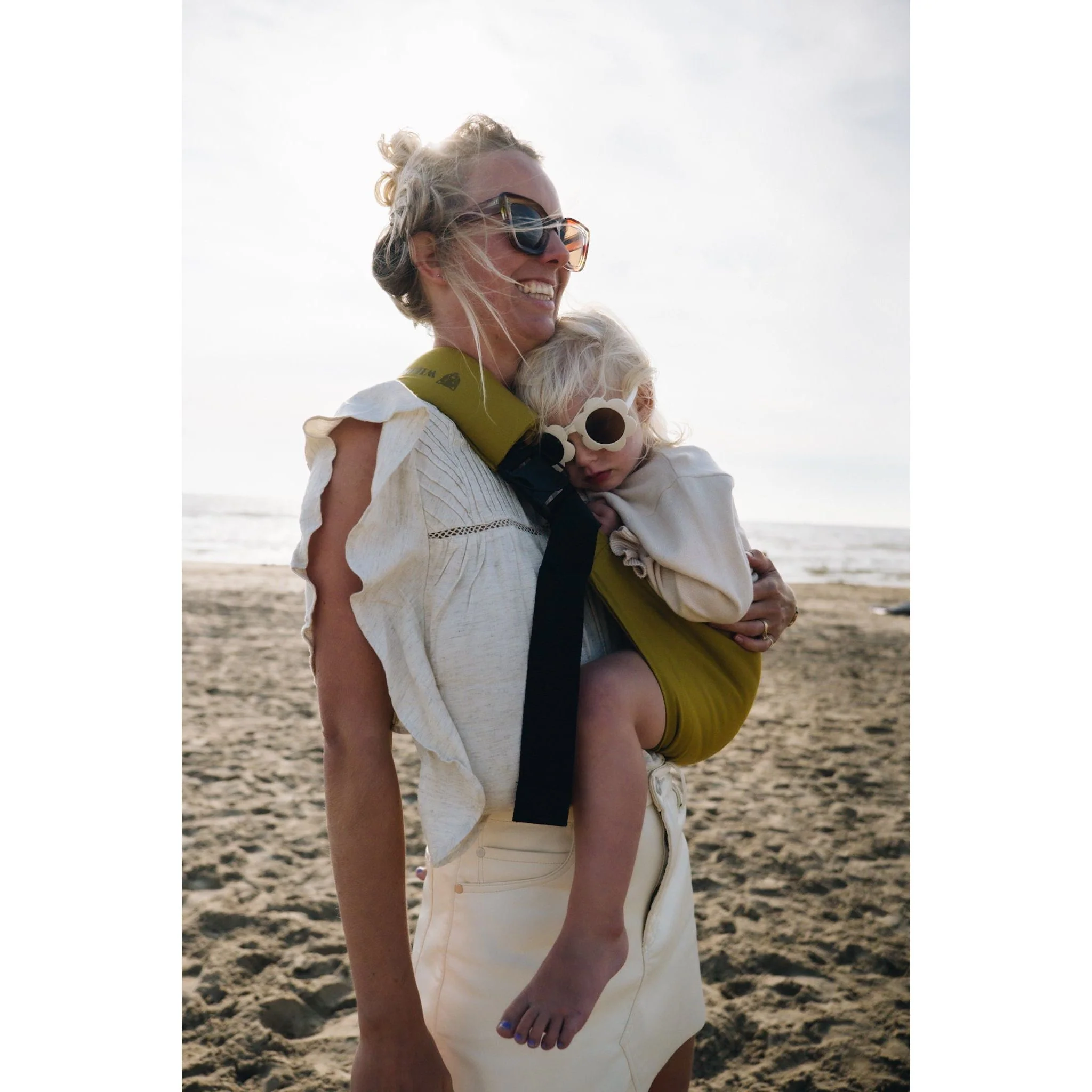
A hip sling gives her a fabric seat against my hip. The strap goes over my opposite shoulder, so my forearm gets a break from holding her weight. I still keep an arm around her. She can still tuck her face into my neck. And when she wants to walk again, I can let her down without too much unbuckling.
I use the sling when I rock her little brother to sleep, too. It works for me whether I’m standing beside the crib or sitting down. When he falls asleep, I lay him in his crib. It works realy well.
It works well for that and for short runs. It does not work at all for a whole outing. If I know I’ll be carrying my daughter for more than 30 minutes I take my regular carrier.
But it is something convenient that I keep for the “just a minute” or for rocking baby #3 to sleep.
5 Sling Carriers for When You’re Sick of your LO
“If I put her down—scream.”
“I can’t sit and hold him; he gets fussy. I have to keep walking. My wrists can’t take it anymore.”
The Velcro phase is brutal. Sometimes you can’t even sit down and hold them. You have to keep walking.
A sling could make all those moments easier. However, all that glitters is not gold. We put the five most popular ones to the test and ranked them.
But before we dive in (spoiler: a certain linen-cotton one became a life saver and is my top baby item this year), let’s break down a few reasons why a sling carrier might be for you — and a few reasons why it might not be.
5 reasons to get a sling carrier:
1) Quick and easy carrying
This is for clingy babies who don’t let you do anything and for the constant ups and downs.
A regular structured carrier can feel like too much of a hassle to put on and get your baby into. The same goes for getting them into the stroller.
Perfect for the carry-a-bit, walk-a-bit phase.
2) Packs light
It packs down small enough to live in your bag, so you can carry it with you all the time. You can use it for a quick errand or when your toddler refuses to walk
3) Getting your baby to sleep and contact naps
We’ll get some heated reactions to this one, but rocking a baby to sleep with just your arms is exhausting. For me, this was actually the biggest use case. I’d rock my baby in it and then move them to the crib. It kind of changed my life.
4) Your toddler is too big for regular carriers
Regular carriers often advertise a maximum weight of 45 lbs. However, your baby will get too tall for a regular carrier long before they reach that weight.
5) Your wrists feel broken and you feel overstimulated
You feel like you can’t put them down to do even the smallest task. You’re nap-trapped, but you need your hands back. Your wrists need a break. There’s actually a medical condition called de Quervain’s tenosynovitis, also known as “mommy’s wrist.”
The worst part is that the pain comes on top of the sleep deprivation, and nothing seems to work. You’ll still need to keep an arm around your child in the sling. It isn’t fully hands-free like a regular carrier, but your wrists won’t feel the same pain.
Things to pay attention to:
1) It’s not for long carrying sessions
At most, 30–40 minutes. Your shoulder will hate you if you try to use it for two hours straight.
2) You need to pay attention to the materials
All the weight goes on the buckle, so cheap, unbranded Chinese buckles could pose a safety issue, because even if the brand tests a certain lot of carriers, using unbranded buckles means performance might change and therefore pose a safety concern.
What to check? Comfort, materials, look, and trust. The fabric matters, and so do the seams, straps, and hardware.
Let’s look at some of the most popular ones:
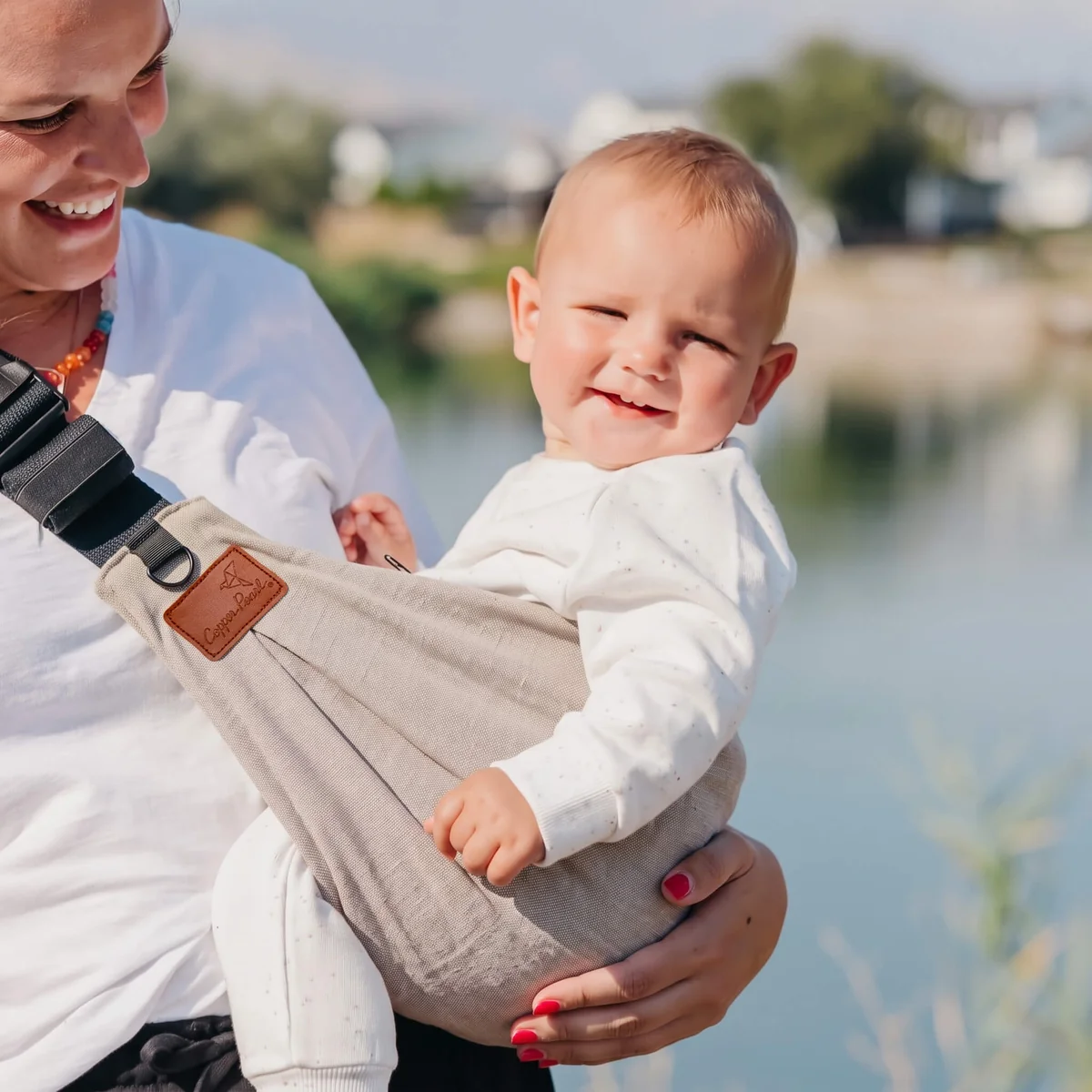
1. Copper Pearl Everyday Sling — 9.5/10

Price: $48 (originally $80). Trust me it's worth skipping those daily lattes.
Why I really like this one:
Comfort: It’s actually comfortable. But to be honest except for Senarah, which is pretty bad, all the carriers have similar construction and offer a similar level of comfort. I just liked the way this one fits me and my baby.
Materials: This is what makes it stand out. The fabric is a linen-cotton blend (55% linen, 45% cotton). It’s the only one that feels actually premium, with a natural texture. The others I tried were made of nylon or polyester, or just felt a bit cheap. And it doesn’t end there. It’s the only one with YKK buckles and a safety loop. That’s a big plus for me: those details give me more confidence in the construction and suggest they haven’t cut corners to save money. All the other brands on this list had unbranded buckles.
Look: Taupe and Sand are my favorites. Easy to wear with everyday clothes, with enough choice to find something that suits you.
Value for money: it is not pocket change but also not a splurge. Sure you might eat ramen for a week but honestly? It has been a real game changer.
Trust: Copper Pearl is a well-known brand that’s been around for many years. They publish their age and weight limits and provide a test-certificate link. Those are concrete details I want available before buying.
Room for improvement
Playing hard to get (or simply not being very good at stock planning): They’re often out of stock. Taupe, my favorite color, hasn’t been available for a while. The same happens with their bibs and burp cloths: the most popular prints sell out pretty fast. Even when they say they’ll be back soon, that hasn’t been the case in my experience.
Pocket: There’s also a zippered pocket, though I’ve never used it. I prefer keeping my phone in my own bag. I don’t think the pocket is particularly useful, and having a phone in there would probably be uncomfortable for the baby.
The verdict: The strongest combination of materials, style, and everyday practicality here.
Just remember to buy from the official website, there are knockoffs popping up faster than Instagram celebrity brands.
2. Tushbaby Liftoff — 8/10

Price: From $72
Liftoff puts its strongest feature right under your toddler: an expandable seat that gives them more room as they grow.
The second best, and a strong contender in the category.
PLUS
Comfort: Comfortable for quick carries, with a padded shoulder strap and seat. Comparable to Copper Pearl, Ergobaby, and Bambora.
Trust: Tushbaby provides detailed specifications and explicit use restrictions. It starts at 18 months and 25 lb, goes up to 55 lb, and requires a supporting hand.
Look: A good selection of neutrals and prints. The overall design feels sportier, especially with the bottle holder in use. It’s practical, but not entirely my taste.
MINUS
Materials: It’s made of machine-washable polyester, which feels a bit cheap for the price. The buckles are unbranded.
The verdict: A strong runner-up. Its higher minimum age and weight narrow who can use it.
3. Ergobaby Upsie — 8/10

Price: $59
The practical contender. Ergobaby covers the basics well, though the styling does less for me.
PLUS
Comfort: A wide bucket seat supports the thighs, and the shoulder strap is cushioned. Comparable to the others.
Materials: 100% cotton and machine washable. Straightforward fabric and care information.
Trust: A very trusted brand. Clear sizing, accessible instructions, and a lifetime guarantee. Ergobaby lists it for 6–48 months and 17–45 lb.
MINUS
Look: Functional. Of these three, it’s the one I’d be least excited to wear.
The verdict: A sensible option with clear specifications. The look keeps it below my top two.
4. Bambora Sling — 5/10

Price: $118 $59
Comfort: Comfortable for short carries and the constant ups and downs. More or less equivalent to the others.
Materials: The current page specifies a cotton lining and a polyester-cotton outer shell. I’d want the blend percentages and more detail about the hardware. The buckles seem particularly cheap and are unbranded.
Look: Visually appealing, with cute prints.
MINUS
Trust: It’s a brand that came out of nowhere, probably a dropshipper. This is where I’d spend more time checking. The website creates a hands-free expectation, which is misleading.
The worst thing is the reviews. They claim to have thousands, but when you filter for one- and two-star reviews, they all look the same and read like five-star reviews. Big red flag.
The verdict: Hard pass.
5. Senarah Toddler Carrier — 2/10

Price: From $46
No pluses here, just minuses.
Comfort: The only one that’s really bad here. The shoulder strap has a weird setup that makes it quite uncomfortable.
Materials: The page describes a cotton blend without specifying the percentages in the product details I reviewed.
Look: The styling is my least favorite of this group.
Trust: The same review issue as Bambora. A brand that came out of nowhere, no hardware material specifications, and weird reviews.
The verdict: Hard pass.
We may earn commission from links on this page, but we only recommend products we love. Promise.
Carrier guide
5 structured baby carriers for the days your baby insists on coming along
For the parent who can locate a pacifier with one hand, but would really like to butter some toast with two.
Your baby is perfectly happy to watch you fold laundry. There’s just one condition. They’d like to supervise from the crook of your left arm. Switch arms? Fine. Put them on the play mat, six inches from your feet? Apparently you’ve gone abroad.
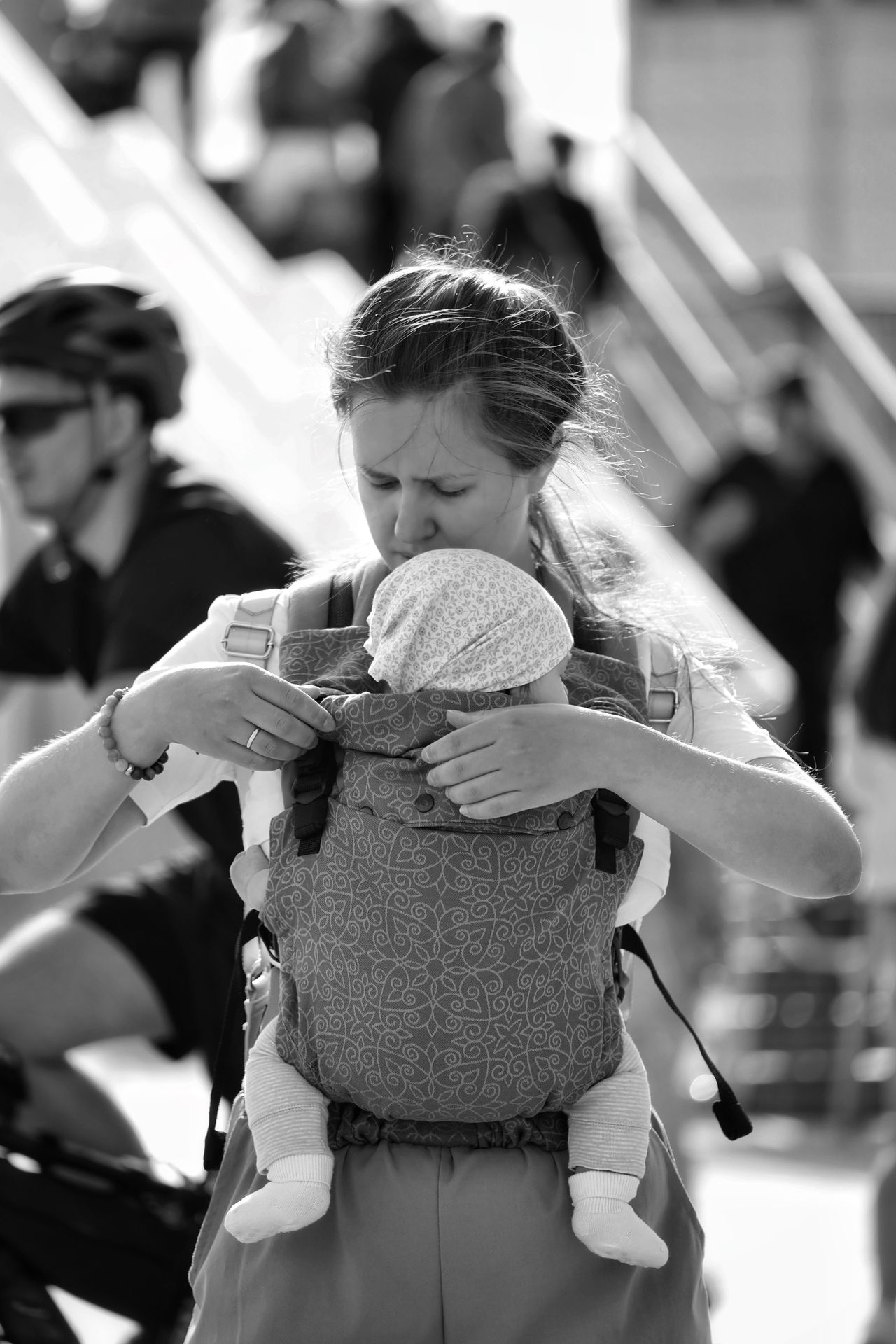
This is where a structured carrier earns its hook by the front door. Two shoulder straps, a shaped seat, and a few buckles give your baby a place to ride while you get on with the morning. The question is which carrier you’ll actually reach for when you’re already wearing one shoe and somebody has started crying.
The WildBird Aerial is our pick for everyday carrying once your baby fits it. Its crossed straps, supportive waistband, and linen outer make a persuasive combination at $178. But the answer changes if you’re bringing home a newborn, want a baby to face outward later, or have about $35 to spend. Here’s where each of the five earns its keep. WildBird’s Aerial specifications
5 reasons to get a structured carrier
- The walk is longer than your arms would like. Scooping up a baby for a cuddle is one thing. Holding them through the walk to the pharmacy, the prescription line, and the walk home is quite another. Two shoulder straps and, on most of these carriers, a waistbelt give you somewhere else to put that load.
- You’d like to finish one small job. A snug front carry lets a baby watch you pair socks or choose apples. It’s particularly handy when an older child reaches up for your hand and expects, quite reasonably, to find it available.
- The route is a pain with wheels. Three front steps, a narrow shop door, and a stroller can turn buying milk into a logistics exercise. On trips like that, wearing the baby can be the simpler choice.
- You like a setup you can repeat. Once you’ve learned the seat and strap adjustments for your body and baby, buckling up becomes a familiar sequence. That’s worth something at 7 a.m.
- You want options as your baby grows. Four carriers below offer a back carry for a child who meets that model’s requirements. That can make the same purchase useful well beyond the months when your baby rides against your chest.
3 reasons you might skip one
- Your toddler requests “up” for exactly twenty seconds. By the time the last buckle clicks, they’ve spotted a pigeon and want down. For a day of rapid transfers, a full carrier can feel like too much ceremony.
- You need the stroller’s basket as much as its seat. A carrier gets the baby up the steps. The groceries, rain cover, and mysteriously indispensable toy excavator still need a ride home.
- The fit doesn’t work for whoever will wear it. Shoulder width, waistband placement, and the ability to reach a buckle matter more than a beautiful product photo. If two adults will share one, check that it adjusts far enough for both and that both can secure it independently.
The five, ranked
We compared published specifications and US prices, giving the most weight to everyday fit, support, materials, and value. The ranking reflects those editorial priorities. Comfort is personal, and this is a research-based comparison. Prices are for the versions linked.
1. WildBird Aerial
Best overall for everyday carrying · $178 in Sugarbird
The Aerial makes its strongest case on an ordinary morning. You want your baby facing you, a waistband with some substance, and straps that cross behind you. You also want to look in the mirror and still recognize the person who got dressed. The Sugarbird version has a petal-pink linen outer with a visible weave. For something that covers most of your shirt, liking the fabric counts.
What earns it first place. WildBird pairs the linen with a polyester mesh lining, padded cross-back straps, and a broad lumbar belt. The belt comes in two size ranges, 24–41 inches and 35–53.5 inches. Those numbers are particularly helpful if you’re buying online or sharing with a partner. At almost exactly the price of the Tula and Ergobaby below, the Aerial is the one we’d choose for a daily inward carry, with back carrying available later.
Room for improvement. There’s no outward-facing mode. And while the carrier is tested for 7–45 lb, WildBird recommends it for roughly 2–24 months and says baby’s mid-ear and airway should clear the panel. A seven-pound newborn can easily be too small. Measure both adults, too. Two sizes are only an advantage for sharing if you fit the same one.
The verdict. Our winner for the stretch of parenthood when a walk around the block routinely turns into three. You get the supportive belt and padded straps you came for, in a fabric you may actually look forward to wearing.
2. Ergobaby Omni Classic
Best for families who want every carry position · $179
Imagine two caregivers sharing one carrier. One likes crossed straps, the other prefers them parallel, and both want the option to let an older baby look out at the world. The Omni Classic is the easiest recommendation for that household. It offers front-inward, front-outward, hip, and back carries. For newborns, the inward-facing starting point is at least 7 lb and 20 inches tall.
What works. The mesh version makes sense if a linen finish matters less to you than ventilation. The adjustable seat and lumbar support give you room to fine-tune the fit, and the overall weight range extends to 45 lb. For just a dollar more than the Aerial, you gain two carry positions and a newborn option.
The tradeoff. You have to learn what the seat adjustment does, how you like the straps, and when to change positions. If you mostly want your baby facing your chest, those extra choices may get little use. The verdict. Buy this over the WildBird if hip or outward carry is already on your wish list.
3. Tula Original, formerly Free-to-Grow
Best for one carrier from the newborn stage onward · $179 in Seedling cotton
The Tula is the closest call on this list. Like the Aerial, it sticks to front-inward and back carrying. Unlike the Aerial, it’s designed to start with a newborn who fits, from 7 lb. Its seat has three width settings, and the panel height adjusts as your baby’s torso gets longer. That’s a meaningful distinction when two babies of the same weight can fit a carrier quite differently.
What works. Padded shoulder straps, a wide waistband, and a cotton body make the Original a straightforward everyday choice. Seedling has a small leaf print on deep green. If you’d like one carrier for the first weeks and later outings, Tula’s 7–45 lb range makes a strong case at this price.
The tradeoff. You still won’t get outward carry. And if your baby already fits the WildBird, the Tula’s newborn setting may be a feature you’ve outgrown before you buy it. The verdict. Put the Tula first on your registry if you want cotton, two carry modes, and an earlier start.
4. Infantino Flip 4-in-1 Convertible
Best budget buy · $31.99 in gray at Target
If you’re unsure how often you’ll wear a carrier, the Flip asks a much smaller financial question. For about $32, you get padded shoulder straps, a waistbelt, an adjustable head support, and a seat that changes width. That makes it a sensible occasional carrier or a second one to keep at a grandparent’s house.
What works. Infantino’s “four” counts inward-facing with a narrow seat and inward-facing with a wide seat separately. The other two options are outward-facing and back carry when baby is ready. That distinction is worth knowing if you’re comparing the box with the four-position Ergobaby, which also offers a hip carry.
The tradeoff. Its 8–32 lb range starts later by weight and ends sooner than Tula’s or Ergobaby’s. The verdict. The strongest value here for occasional use. If the alternative is stretching your budget for an Aerial you might rarely wear, buy the Flip. Read Infantino’s specifications ·
5. BabyBjörn Baby Carrier Mini
Best for the first few months · $119.99 in 3D Jersey
The Mini answers a narrower question. What if you want a soft front carrier for the weeks when getting everyone dressed and out to the mailbox counts as an outing? The 3D Jersey version is a natural candidate for that job. You can undo the front section to lift your baby out, a thoughtful detail when the transfer back out is the part you’re dreading.
What works. BabyBjörn lists a tested range of 7–24 lb and 21–30 inches. Its own guidance highlights the first six months, up to about 15 lb, as the recommended period. That distinction helps set expectations about how long you’ll want to use it.
The tradeoff. The Mini is a front carrier. There’s no back carry waiting for you when your baby gets heavier, and $119.99 is a substantial spend for a shorter window. The verdict. A good specialist for the newborn months. The Tula is the better buy if this needs to be your only carrier.
Which one would we buy?
For a baby who fits WildBird’s panel and a parent who mostly wants to carry them close, the Aerial wins. The closest decision is between the three carriers around $179. Choose the WildBird for its linen and cross-back fit, the Tula if you need that everyday carrier to work from the newborn stage, or the Ergobaby if you know you’ll use the extra positions. And if you just want a carrier for Saturday errands, the $32 Infantino leaves a lot of room in the grocery budget.